

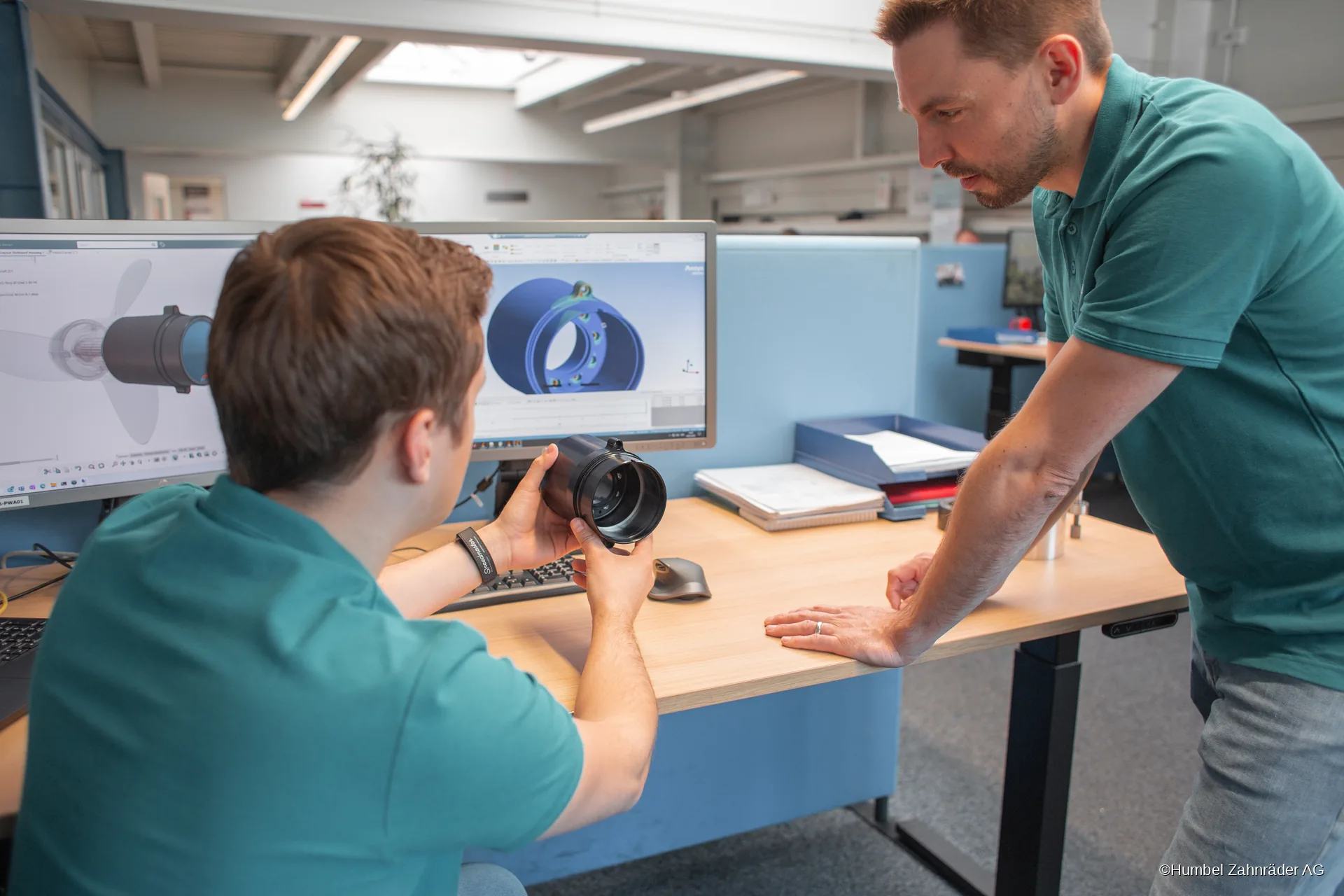
Many drive components exceed budget or miss delivery deadlines not because something went wrong on the shop floor — but because design decisions were made before anyone with manufacturing knowledge had a seat at the table. This article identifies exactly where that gap arises and how to close it.
Design for Manufacturability in Gear Engineering: A Mindset, Not a Repair Step
Design for Manufacturability — DfM — describes the principle of designing components from the outset so they can be manufactured process-reliably, reproducibly, and cost-efficiently using the production processes actually available. In gear engineering, this approach is particularly relevant: a gear is a highly complex component in which geometric, material, and manufacturing decisions are tightly interlinked.
In practice, however, DfM is rarely a structured process. More often, it is a downstream correction. The designer completes a design, the contract manufacturer receives a drawing — and then quietly begins compensating for problematic areas, absorbing issues, or pushing the customer toward changes. This costs time, creates friction, and increases quality risk. Evidence from manufacturing practice consistently shows that approximately 70 percent of production costs are determined during the design phase — not on the shop floor.
Where Design Decisions in Gear Manufacturing Become a Cost Trap
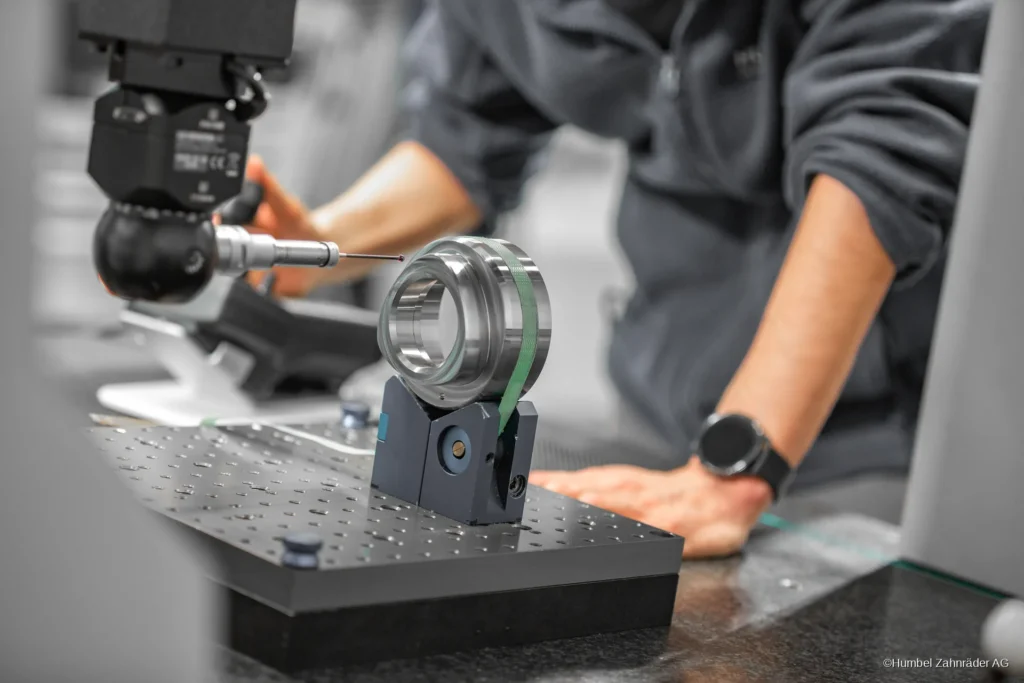
The most common problem areas in the manufacture of gear components are not outliers. These issues arise whenever design and manufacturing expertise are not integrated.
Tolerances: The Hidden Cost Driver in Precision Gear Manufacturing
Overly tight tolerances on non-function-critical surfaces are among the most widespread cost drivers. In precision machining, manufacturing costs do not rise linearly — tighter tolerance bands can lead to significantly higher production effort and cost. Assigning tolerance fields without feedback from manufacturing creates unnecessary grinding and measurement effort in areas that are irrelevant to function and mating behavior. The principle holds: tight tolerances where function demands them; manufacturing-appropriate tolerances everywhere else.
Tooling and Fixture Changes
Geometries requiring a high number of clamping operations or complex setup changes increase not only unit costs but also error sources. Manufacturing-appropriate geometries minimize these interfaces — and with them, a significant portion of hidden production effort.
Verification Calculation of the Gear Data:
A gear is defined by a large number of parameters collected in the gear data table on the drawing — module, tooth count, helix angle, profile shift, center distance, but also flank corrections and tolerance specifications. In practice, however, these specifications are frequently not consistent in themselves or leave room for interpretation: drawings often describe the gearing only incompletely or contradictorily, and key parameters are missing. When the gear data is recalculated by an experienced engineer, it can be verified at manageable effort whether the gearing is fully defined and all specifications are consistent — rather than only within quality assurance.
Material Selection and Heat Treatment in Gear Manufacturing
The choice of case-hardening steel, the nitriding capability of a material, the achievable core toughness after hardening, and distortion sensitivity during heat treatment are parameters closely linked to subsequent hard finishing. Significant distortion of a component during heat treatment increases grinding effort or requires a special hardening process in a protective atmosphere. This interaction is not intuitively apparent without manufacturing experience.
The Knowledge That Emerges at the Interface of Engineering and Production
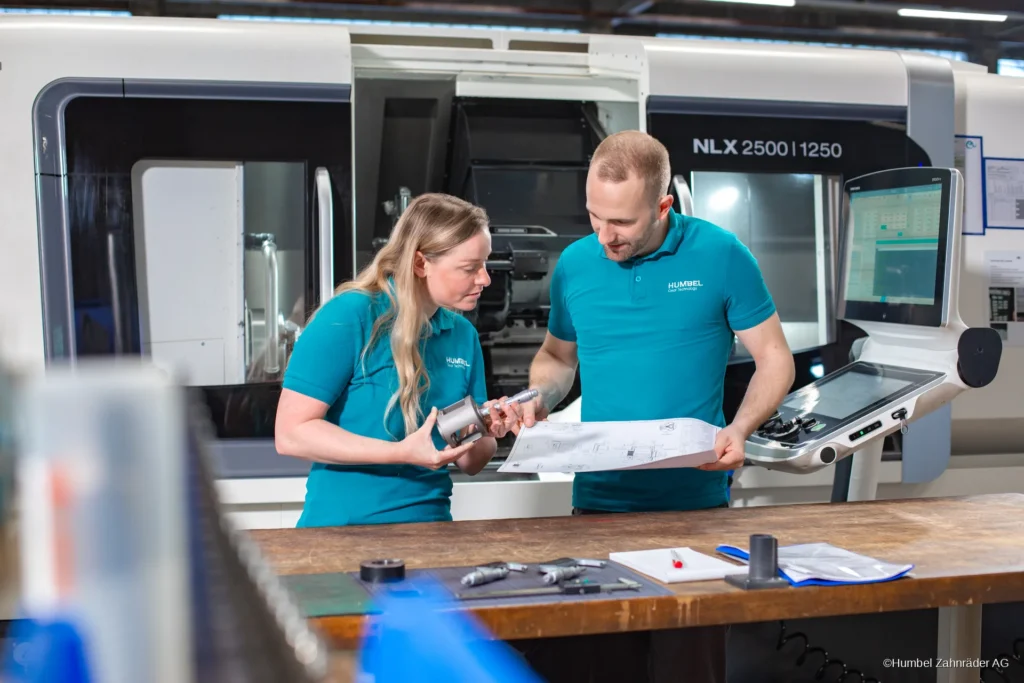
The problem areas described above share a common root cause: design and manufacturing communicate too rarely — and when they do, usually too late. For companies without in-house gear manufacturing capability, this gap is structural: they have no internal contact who makes manufacturing constraints visible during the design process.
This is precisely where the difference between a pure contract manufacturer and a partner who understands both worlds becomes tangible. Bringing manufacturing knowledge into the design phase is not an add-on service — it is the point at which downstream changes and their cost implications are systematically avoided.
In practice, this means, when a manufacturer with deep engineering competence is integrated early into development, they can align gear geometry together with the customer for function, manufacturability, and cost structure. Based on available technologies, they assess which tolerance fields are appropriate, and which heat treatment will take the component process-stably through production.
Humbel Gears can also support this process selectively, for example we can assist with specific topics relating to specific technologies and processes or help with the verification of gear data. Following delivery, we could provide ongoing support also during the prototyping and testing phases, offering comprehensive assistance with all topics related to gears or gearboxes.
The Design Phase: The Most Important Cost-Leverage Window
The time dimension is decisive. Design changes introduced before tooling and fixture design cost a fraction of what the same changes cost after the first prototype run — or during series production. This is not a theoretical argument; it is based on our daily experience of projects in which Humbel was not involved in the development process from the outset. Most adjustments would have been avoidable with earlier involvement.
Feedback from a leading customer captures this precisely: “Our previous supplier was a pure contract manufacturer. What we were looking for was a development partner who supports us in finding the optimum — and we found that with Humbel.”
When to Start the Conversation: Early Involvement in Gear Development
Companies that source gear components externally and lack access to manufacturing know-how during the design phase benefit from early dialogue — regardless of whether the project involves prototypes, small series, or the launch of a new platform. Whether an existing drawing is manufacturing-appropriate, or whether a new design should be optimized from scratch, can often be narrowed down quickly in an initial technical conversation.